
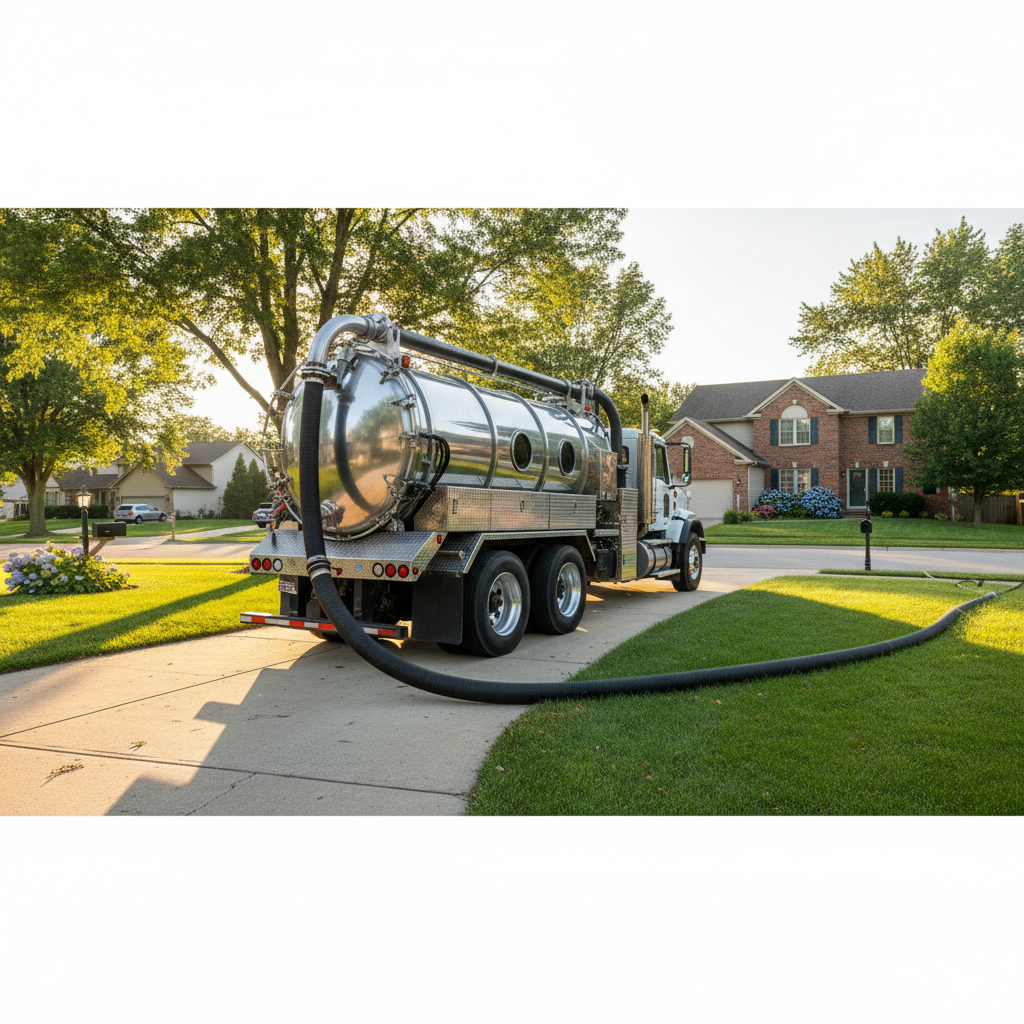

How often should I pump my septic tank?
Last updated Feb 2026 · 3 min read
For a typical three-bedroom home in the Chicago suburbs, the standard answer is every three to five years. But that range can compress fast. A household of five running garbage disposals daily can fill a 1,000-gallon concrete tank in under two years. A couple in an empty nest with the same tank might stretch to seven. The honest answer lives in your usage, not a calendar.
Poly tanks — common in newer construction across Will and DuPage County — behave differently than poured concrete. They're lighter, which means the sludge layer sits differently and inspections matter more. Our camera scope gives you a before-and-after look at the inlet baffle and the effluent filter, both of which most homeowners have never seen.
Average pump interval
Standard suburban tank
Typical pump time
If you've bought a house in the last decade and can't find a pump receipt in the disclosure, assume it hasn't been done. Sellers frequently don't know, and the previous owner's records rarely transfer. We can pull the records from the county if the permit was filed — and if it wasn't, we'll tell you that too.
Typical Cost Range
Routine pump in Chicagoland: $275–$450 for a standard 1,000-gallon tank. Add $75–$125 for camera scope documentation. Emergency weekend service adds a flat $150 surcharge.
What are the signs my drain field is failing?
Last updated Feb 2026 · 4 min read
A drain field fails quietly, then all at once. The soil absorption system — lateral lines buried two to three feet below your lawn — can handle years of biological loading before the symptoms become obvious. By the time sewage is surfacing in your yard, you're already past the point where a pump would have bought you time.
System Diagram — Typical Suburban Installation
Chicago-area clay soil is unforgiving. Unlike sandy soils that can recover from biomat buildup, heavy clay compresses and stays compressed. Once a field is saturated in DuPage County clay, replacement — not rehabilitation — is usually the outcome. That's a $8,000–$18,000 project. Catching the early signs buys you options.
Warning Signs — Ranked by Urgency
Wet or spongy ground over the drain field
Biomat buildup is blocking effluent absorption. Common after heavy rain seasons in Will County clay soil.
Sewage odor near the yard or in the basement
Hydrogen sulfide is escaping through saturated soil or a failing vent stack. Don't wait on this one.
Slow drains throughout the house simultaneously
One slow drain is usually a clog. All drains slow at once points downstream — to the tank or field.
Unusually green or lush grass over the field lines
The lawn is fertilizing itself with effluent. Looks healthy, isn't.
Coliform bacteria in your well test results
If you're on a private well and your annual test flags coliform, your drain field proximity needs to be checked immediately.
Drain Field Repair Costs
Camera scope to diagnose: $150–$250. Lateral line jetting: $400–$900. Full field replacement in Chicagoland: $8,000–$18,000 depending on county permit requirements and soil conditions.
Will my home inspection require a septic certification?
Last updated Feb 2026 · 3 min read · For real estate agents & buyers
For real estate professionals: Most lenders financing homes in Cook, DuPage, Will, and Lake counties require a septic inspection as a condition of the mortgage when the property is on a private system. FHA and VA loans require it without exception. We can typically schedule within 48 hours and deliver the written report same day.
Illinois doesn't have a uniform statewide septic inspection law, but the four-county Chicagoland area has built its own de facto standard through lender requirements and local health department protocols. If you're selling a home in Naperville, Joliet, Libertyville, or Wheaton with a septic system, assume the buyer's lender will require it.
The inspection we perform follows the six-step protocol that satisfies all four county health departments. We document everything on video and deliver a written report with photographs. If the system passes, you get a certificate. If it doesn't, you get a clear description of what needs to happen — no vague language, no surprise add-ons at the closing table.
What Our Inspection Covers
Locate and expose tank lids
Seller typically pays
Camera scope inlet & outlet baffles
Documents condition
Measure scum and sludge layers
Determines pump need
Inspect distribution box
Often missed by others
Load test the drain field
Runs water, watches response time
Issue written certification
Required for closing
Inspection Cost
Full 6-step inspection with written certification: $350–$475. If a pump is required to complete the inspection, that's additional but billed at our standard rate. We don't bundle fees to inflate the total.
What happens during a septic emergency backup?
Last updated Feb 2026 · 3 min read
Active backup? Call directly.
(312) 555-0187 — 24/7 Emergency LineA septic backup means raw sewage is finding the path of least resistance — usually your lowest floor drain, your basement toilet, or your shower. The system is hydraulically overwhelmed. This is a health event, not just a plumbing inconvenience. Stop using all water in the house immediately.
When we arrive, we locate and open the tank first — not the drain, not the cleanout. The tank tells us whether this is a full tank (fixable in forty minutes) or a failed drain field (different conversation). We won't scope the line until the tank is pumped and we can see what we're working with. That sequence matters and we stick to it.
Our Emergency Response Sequence
Dispatch vacuum truck from nearest staging location in your county
Cook, DuPage, Will, Lake
Locate tank, break risers if needed, begin pumping
1,000-gal tank: ~20 min pump time
Camera scope inlet baffle and outlet, inspect D-box
Video recorded for your records
Written field report, next-step recommendation, follow-up scheduled if needed
No open-ended "we'll call you"
Most emergency calls in Chicagoland resolve in under two hours from first contact to driveway departure. The cases that don't are drain field failures — and even then, we leave you with a clear diagnosis and a realistic cost estimate, not a vague "it depends."
Emergency Service Pricing
Standard emergency pump (weekday): $375–$500. Weekend/holiday surcharge: +$150 flat. Camera scope included at no additional charge on emergency calls. We don't charge a "diagnosis fee" on top of the pump.
Not an emergency, but want to stay ahead of it?
Schedule a routine pump and scope now. Most Chicagoland homeowners are 2–3 years overdue. The form in the sidebar takes 60 seconds.